Showing posts with label ad&d. Show all posts

Monday, September 19, 2016

How to Use New Rules to Capture the Classic Feel


Today's post is a partial response to the above video made by "Black Belt Games". If you haven't seen it, I encourage you to watch it and the two other parts to the series. It's a discussion about the Advanced Dungeons & Dragons 1E classic feel, and how that contrasts to many modern RPGs (including modern D&D).


Classic Style Dungeon Crawling

In the video there is talk about the methodologies used to negotiate a dungeon back in the 1980s. Specifically, how players often had to rely upon their own wits, common sense and attention to detail (to the GM's descriptions of both room, scenarios and circumstances) to avoid traps, ambushes, solve puzzles and otherwise get into a dungeon, loot it of treasure, and survive on the way out.

This, as the video says, is a very different approached compared to the emphasis, encouragements and negligence of modern tabletop gaming. Today's players often have what has been called "Heads Down Syndrome"; which is to say that whenever a problem is presented to a band of adventurers, every player looks down at their character sheet to figure out which skill, feat, spell, etc. they can evoke to solve the problem. The entire affair of navigating a labyrinthine dungeon of horrors has been reduced to a simple act of "hunt and peck" for the best superpower that suits the problem. This is akin to having a toolbox full of tools, and your three hour game session boils down to being presented different scenarios and your only job is to find the right tool.


In classic gaming, and that of the Old School Renaissance (OSR) community, YOU--the player--had to out-think the problems you were presented. The tools you had at your disposal were whatever your character was physically capable of doing, as well as whatever equipment your character was carrying on their back.

Characters were no super heroes out of the gate. They were mortal men and women who were very squishy and often times met an untimely demise (sometimes early into the adventure). This in turn encouraged players to handle their characters more cautiously. No smashing down doors without first considering the noise it'll create in a cramped dungeon; and whose ears may be alerted to your presence. Traps were a constant fear, and the seemingly-now-extinct tricks would play with player's minds.

If you've ever played the game "Dungeon Quest", you'll understand the sentiment I'm trying to convey. It's a parallel solitaire boardgame of players-versus-the-game style where you are an adventurer trying to get to the center of a dungeon, rob a sleeping dragon of its riches, and get back out before sundown. The challenge is hinted at when the rulebook states there's only about a 20% survival rate. What other boardgame have you played has proudly stated such a steep difficulty? It immediately sets a mood "survivalism" and adds tension and excitement to the play session.

Skills Systems

In OD&D, BD&D and AD&D 1E there were no such things as "skills". No skill checks, no +1 to falconry or anything like that. The logic was that if your character attempted to do something extraordinary, they would simply roll 1d20 and hope they rolled under their score ("Roll Under for Achievement"--RUNA). The six attributes (strength, intelligence, dexterity, constitution, charisma and wisdom) were broad enough and generic enough that they could (theoretically) cover 80%+ of the situations you had to roll for. I've always found these six attributes genius, really. They were perfectly balance; not too generic but not too limiting.

Yet in 2E and on we begin to see the introduction of skills. Even Rules Cyclopedia introduced optional rules for a skill system. The idea was that characters could have a base score for their six attributes, but then excel in certain fields of study, or perform poorly in other fields, in some cases. To me, the introduction of skills was genius. It allowed players to further flesh out and express their characters. It allowed characters to be more individual.


Yet, as often happens, sometimes there is too much of a good thing. As Wizards of the Coast bought the Dungeons & Dragons intellectual property from TSR, we then saw tons and tons of skills, and even more bonuses, feats and so forth. I call this transition the "death of a thousand +1's". The ability to mix and match various bonuses, spells, feats, skills and so forth caused huge swings in balance. The traditionally physically weak wizard could suddenly negate their weakness with feats, and amplify their spells to ridiculous heights; which in turn caused an arms-race between the classes, in an attempt to keep up.

So it should be no surprise that in today's age many people of the OSR community reject skills, almost on principle, because of what it has lead to. But what if there was a better way? A compromise?

Let's start by throwing out the skill tables/lists. Every RPG tries to come up with their own unique list of skills that the designer thinks the players will need in their adventures; depending on the genre of the game. However, we've all been ignoring the gorilla in the room: if skills are based off the type of action, then there are literally tens of thousands (if not unlimited) potential skills a player character could engage in. Trying to cover every conceivable action is ignoring the genius that Gygax gave us: the generic "six attributes" cover most of what we need. So, we need to adopt a "one size fits all" model, rather than a "1,001 skills" model.


Let's imagine that every player started with a number of "skill points" equal to their intelligence. There are no defined skills in the rulebook. Instead, players are encouraged to "make up" their own skills based off what they want their character to know, instead of what the game designer thinks they want them to know. For example, if I was making a burglar and I have 10 skill points to allocate, I could choose to place them like so:
  • Lock Pick: +2
  • Hide Motive: +5
  • Climb: +3
In my mind, I want my character to pick out victims he'll steal from, then talk with them under the guise of becoming their friend. In truth he'd be fishing for information to determine if they're wealthy, and if so, where they live and any security measures he should be aware of before robbing their house.

Because this example skill system is amorphous, I was able to tailor my character exactly how I wanted, rather than being pigeon-holed into a preset. That's not to say that you can't provide example skills for players who enjoy the "pick and go" method to character creation.

Professions

One mantra the OSR community likes to parade is more narrative freedom and emphasis on GM fiat and player character expression. The idea being that there should be more immersion within the game; and less about preset superpowers or getting lost in the complex rules. This sometimes is expressed as a "roll-playing versus role-playing" argument.

One aspect I'd like to see expanded is a character's background; specifically that of their profession. Where did your character come from, and what trade did they take up prior to adventuring? What skills did their trade teach them? Why did they take up that trade? Answering these questions is a great way to develop a personality for your character and better understand the hardships (and growth opportunities) they experienced in their past.


Many modern RPGs treat professions similar to that of skills. Game designers try to come up with a list of professions they think the players will want to play, throw handfuls of +1 modifiers at the previously mentioned skill list/table in a way that they think best suits that profession, then call it a day. For example, a game designer might determine that a "ranger" profession pivots off the idea of having an animal familiar, and so states that all rangers get a +2 to animal handling.

The problem will all of this is the same as that of skills: there are literally thousands of professions out there, and the multitude of skillsets required to operate effectively within each of those professions can differ dramatically. Game designers are faced with a fork in the road:
  • Create a massive compendium of 1,001 professions that covers as much as humanly possible
  • Create a paired down table that covers a few core professions that is subject to the designer's own biases/preferences
  • Ignore the whole problem and don't have support professions or hand wave it away
But what if there was another way? Something akin to the skills system laid out above. What if we had the audacity to let the players "make up" their own professions? Would the world end? No, I don't think so. So long as we say that players can choose any profession/background for their players but every part is subject to the GM's approval, I think we'll be fine.

This "virtual profession" system opens the flood gates to countless job titles that we don't typically see in RPGs. Instead of being a "fighter", suddenly you could be a "baker" or a "fletcher" or "artisan". The real question is, how would this self-proclaimed profession affect the in-game mechanics? For that, we turn to our next point.

Advantage/Disadvantage System

One of the best things that came out of fifth edition Dungeons & Dragons, in my opinion, was the "advantage/disadvantage" system. The premise is so simple, yet can be used in a wide range of areas. If your character has advantage in something, you can roll twice and take the better roll. Disadvantage was simply the opposite: roll twice and take the worse of the two rolls. Genius.


We can take this simple, yet "modern" system and apply it to our professions and skills system. Here's how (this may come off as a bit controversial and bold):

Rule 1: Anytime you would perform a skill test, you must perform it with disadvantage.

I don't know about you, but to me that's a pretty sweeping rule. It sounds kinda dumb, too, at first glance. Every single time I want to pick a lock, climb a cliff or bargain over the price of an item, my character has disadvantage? Why? Here's why.

If your character was a warrior for many years, it is reasonable to assume that they are good at all things warrior-related. They're good with a sword, battlefield tactics, command structure and so on. But if a character attempted to perform an action they've never done in their life (e.g. the warrior attempts to dance), they're naturally going to suck at it. But if it's an action they've done many times professionally, or because they're naturally skilled in it, they wouldn't suck (aka wouldn't have disadvantage). So, performing all actions with disadvantage is another way of saying "As beginners, we all suck the first time." so all actions we perform start with disadvantage. To complete this train of thought, we need a second rule:

Rule 2: If your character attempts to perform an action that would fall within the responsibilities of their profession, or they have one or more positive modifiers (e.g. "+1") in that skill, they can perform that skill test as normal (without disadvantage). 

Let's imagine that warrior, who is used to forced-marches, battling foes on the battlefield, and sleeping in military encampments, suddenly finds himself deep in a dungeon and wanting to climb down a sheer cliff face. The GM could make a call that "rock climbing" is not in the job description of a warrior, nor did the player choose to put any of their skill points into such a skill, therefore if they do choose to climb down the cliff they will do so with disadvantage.


At this point I want to take a moment and discuss what the implications are for such a set of rules. What would you, the player in charge of this warrior, think knowing their life hangs on a climb test with disadvantage? How would you react? My guess is your reaction falls somewhere within one of these possibilities:

  • Discouragement: You think "gee, on second thought climbing down this cliff looks dangerous and I don't really know anything about rock climbing. I better not."
  • Teamwork: You think "gee, on second thought climbing down this cliff looks dangerous and I don't really know anything about rock climbing. I better let the rogue do it since it is actually something he does professionally."
  • Inspiration: You think "gee, on second thought climbing down this cliff looks dangerous and I don't really know anything about rock climbing. I better get out some rope."
Of course it is possible you might think "this sucks" and attempt to flip the gaming table over in a fit of rage, but I hope cooler heads prevail. Anyway, I want to talk about each of these points individually.

In the first reaction (discouragement) we have a dangerous situation that forces the player to play more cautiously, and to second guess their decisions. This is the exact style of play the above video was talking about when they described the "feel" of AD&D 1E. We want things to be hard. We want things to be deadly. We want the characters to fear for their lives and stay close to their strong points.

In the second reaction (teamwork) we have what I call a "soft class limit", which is different than a "hard class limit". To better explain what I mean, I'll tell you of something that happened to my fighter character last night, during my weekly AD&D 1E session:

[My fighter and his allies were climbing the stairs leading to the top of a pyramid.]
Me: "As I climb the stairs on the right-side, I want to look carefully at each ledge to see if I notice any foot prints or other sign of recently activity."
GM: "Are you a ranger?"
Me: "No..."
GM: "You see nothing."
I couldn't help but chuckle when the GM said this. However, my initial reaction was both a positive and negative one. Negative because I felt like it was unfair for my character to insta-fail at attempting a task simply because I was not a ranger. This is what I call a "hard limit" to a class. Because I wasn't a ranger, I had no chance of succeeding at tracking.

However, I also had a positive reaction: I was obviously attempting to do something outside my expertise, and the GM was reminding me to color within the lines, or, put another way, "play your class/role".

The balance between these two reaction is to have limits, yes, but not make them so glaringly black and white. Make the limits "soft". We can encourage teamwork between players by giving everyone a role to play. If you're a fighter, you knock heads. A thief "knows things". A magic user casts magic. But characters should still be able to attempt any "skill", it's just that if they try to do something that isn't within their profession, they get disadvantage. Success is still possible, just far less likely.

The last reaction (inspiration) is all about using an obstacle or problem to foster creativity. Specifically, through dungoneering equipment.

 Equipment

In the video, the narrator mentioned how in old-school RPGs, players would spend considerable time carefully picking out the necessary equipment needed to travel overland, enter a dangerous dungeon, cave, catacomb or castle, loot it of its treasure and return home safely. In a way, equipment was the original "skill system". The idea being that equipment was used to augment or enhance character capabilities. In modern RPGs players choose a bunch of skills and gloss over equipment. But back in the day, however, skills didn't exist and players picked spent time choosing equipment.


Equipment, and resource management, should play an important role in any adventure. But in today's age it's hard to convince players of the importance of equipment because it's often difficult to quantify its importance. We can say that equipment does one or more of the following:

  • Opportunity: Some actions, without the necessary equipment, simply cannot be done. For example, one cannot pick a lock without a lock pick kit (or home-made equivalent). Therefore, much equipment simply affords characters the opportunity to do something otherwise impossible.
  • Value: Of course equipment has a price, or a value associated with it. Treasure is a great example where it has no utility function; it's simply there to be sold for money.
  • Enhancement: Some actions can be performed without equipment, but by using equipment, it greatly increases your convenience or chances for success. A rope used while climbing down a sheer cliff is there to help you, though you could attempt to do it without such an aid.
The first two points go without saying. A key unlocks a door, a torch lights a darkened passage, and a beautiful painting sells for big bucks. But the last point (enhancement) can be harder to pin down. For this, we need a third and final rule:

Rule 3: If a character attempts an action that can be performed without equipment, but uses equipment to aid them, they may perform that action normally (without disadvantage).


With this rule, we can provide a universal value to all equipment. Characters are encouraged to buy and use various gear because it will offset the default disadvantage most everyone has to suffer when performing an action outside of their comfort zone. Players will be less likely to skip through the equipment acquisition step of character creation. They can compare their character's strengths to that of the opportunities and enhancements provided by their accessories.

Conclusion

To tap into the spirit of classic gaming, we don't need to be super-specific like modern RPGs are today. We can have broad-reaching professions that provide a fast-and-simple advantage system. We can also use the popular skill modifiers that are in literally every RPG made today, but tone down the complexity and tailor it as an expression of our character's background and personality. Lastly, we can bring back the important of expedition equipment by giving players a small treat for using it.

Saturday, September 17, 2016

Making a Better Cleric


I'm not sure if anyone caught this, but I figured I'd share this little nugget about clerics in the Basic D&D booklet (red cover).
"...Clerics do not receive any spells until they reach 2nd level (and have proven their devotion to their god or goddess)." -B9
Interesting justification in parenthesis there. Clerics have to first go through some trial or test of faith before their deity endows them with a glimmer of their divine powers. We also see another idea on the same page:
"...Clerics are forbidden by their religious codes from using edged weapons, such as swords and arrows." -B9
I have little doubt that both quotes are simply excuses to justify mechanics set up in an effort to "balance" each class. After all, a fighter with magic powers is automatically more awesome than just a fighter, so the designers had to add artificial restrictions. But that doesn't mean we can't take something from this sentiment.

The big takeaway here is that:
  1. Clerics must prove their devotion to their deity before recieving bonuses (or perhaps suffering a penalty)
  2. Clerics are forbidden from certain actions
Next up we check out "Turn", or as it'd later be called in Rules Cyclopedia (RC) "Turning Undead".
"Clerics are very helpful when undead monsters (such as skeletons, zombies and ghouls) are encountered. When a cleric encounters an undead monster, the cleric may attempt to 'Turn' (scare) the monster instead of fighting it. If a cleric Turns an undead monster, the monster will not touch the cleric and will flee from the area if it can." -B9
Interestingly, it goes on to say "If a cleric is successful at Turning some undead monsters, the player must roll 2d6 to find how many hit dice of undead monsters are Turned." which is different than what is found in RC, which states "...the Dungeon Master (not the player) will roll 2d6 to determine the number of Hit Dice of undead monsters that turn away."

Breaking it all Down

The Cleric is a complicated class. It's a hybrid of sorts, really. It can fight similar to a fighter, but can cast magic similar to a Magic-User, though it has its own magic and has a special ability called "Turn" (or "Turning Undead" if you're reading RC).

The benefit we have is we can start with the red cover BD&D booklet and jump into the future by reading AD&D 2nd edition, Rules Cyclopedia, 3.x, 4E and 5E. We can see how the cleric began, conceptually, and how it changed and matured over time. In my opinion, it's more important we understand the "spirit" of the cleric and the intended flavor of the designers, more than the individual rules and score numbers (although you know I'm going to look at them anyway, so we might as well get started).

Exigences

In my own game, Open Adventure (OA), each Archetype has a set of "exigences", which is a fancy way of saying "requirements". These actions must be performed on a daily occurrence, lest the individual powers of an archetype begin to wane. This is the same sentiment that we see with the first quote about clerics ("proving ones devotion"), but this is also found with Magic Users (in BD&D) being required to be well-rested and spend 1 hour to memorize spells. The idea in my game is that a "disciple" (the OA equivalent of a cleric) must devote 1 hour to prayer and devotion per day.


Additionally, disciples must follow three "rites" (required rituals) and abstain from three "ascetics" (forbiddings). The specifics of the rites and ascetics are left to the Game Host, and are modeled after the individual focus, alignment and wishes of the specific deity that the cleric obeys. Lastly, because in OA alignment can change based off player character actions (or the virtues & vices they obtain), disciples must remain of the same alignment as their deity. Such rules allow for a more open, free-form alternative to the idea of clerics having religious codes that suit the desires of their deity, rather than one single rigid path (e.g. clerics are forbade from using edged weapons [as a side note, if a cleric worshiped an evil deity, wouldn't they WANT you to use edged weapons to kill your enemies faster?]).

If a disciple were to lapse in any of the above requirements, the penalty they suffer is total revocation of their clerical magic. In other words, if they don't keep their patron deity happy, their deity cuts them off. But don't worry, they can get their mystical powers back after 6 hours of devotion to their deity and apology for their "sinful" ways.

Alignments

In BD&D they had the option for good clerics to be a bit naughty. They could be bad (or evil in a way) by casting a clerical spell, but in reverse. Instead of healing someone, you could cause them injury, for example. This was a great play on the polarity of good and evil (or law and chaos, as it was called back then). It hinted to the possibility of there being evil, or dark, clerics; which in turn gives raise to professions such as "necromancers" and "vodoo priests". But, in my opinion, this "alternative cleric" was never fleshed out enough.

If we fast forward into the future of D&D, especially 3.x and beyond, we see this concept comes to fruition. There are rules for good-aligned and evil-aligned clerics, and how they can channel positive and negative energy. In my opinion, basic versions of these rules should be included in BD&D since they were essentially missing from the start.

So, we have full support for good and evil clerics. But what about neutral clerics? If you're thinking to yourself "there's no such thing", you'd be wrong. In Rules Cyclopedia, in fact, it talks about how Druids are a prestige class, of sorts, derived from clerics. Since Druids are always neutral, we essentially have support (or at least tolerance) for the idea of neutrality existing within the ranks of the cleric class.


However, the way druids are handled in RC has never seemed right to me. Why must we wait until level 9 to become a druid? Even if we did, why would a cleric remain ardent to one alignment for 8 levels then decide to walk away from the cosmic battle between good and evil (not to mention the cities of men) to live among forest animals?

Instead, I propose the druid become its own class that can be pursued at level 1, and treated as a neutral cleric that devotes itself to the cosmic force(s) of the material plane. This would explain why nature and the universe are so sacred to a druid/neutral cleric, with none of the "ex pat" mid life crises.

Exorcism

The last topic we need to tackle are the special powers that these disciple/cleric characters posses. Whatever they end up being, we can conclude that they A). are either only given to a cleric if they are "ardent" in their faith and/or can be revoked if the cleric isn't walking the path right, and B). should fit the theme and focus of the cleric's alignment. That means support for good deeds as well as neutral and evil ones.


The common thread with all clerics throughout the history of D&D has been the ability to repel undead. First, the term "Turn" or "Turning Undead" should be changed. It's a confusing term that has no intrinsic meaning (that I'm aware of) outside of D&D, and must first be explained to be understood. Rather, the term "exorcism", which is a real term, is far better suited for the job.

Terminology aside, a purview of the 3.5 rules show us that there is a far more refined approach to clerical exorcism:
  • Good-aligned clerics can attempt to destroy or rout (force to retreat) undead creatures
  • Evil-aligned clerics can attempt to command or rebuke (force to cower) undead creatures
  • Neutral-aligned clerics can mix and match between the two options
As much as I love OSR and Basic D&D, I have to say that these "new" rules are far more in spirit with what the "old" rules were trying to do. They fully support all the alignments by offering fun alternatives to evil clerics (commanding the undead rather than destroying them).

While we're discussing "turning" undead, let's talk about that "turning undead" table.


This bad boy has got to go. From a game design perspective, it's never a good idea to have such an innate common ability require such a large and verbose table. Especially when it can be condensed down into a few simple rule statements.

To start, the whole premise uses a 2d6 system. Since it's based on the idea of routing, or invoking fear and panic, in undead, we can replace this monstrosity with another system already in place: the morale system. The morale system exists to gauge a creature's willpower and whether that creature is fearful during combat (or other situations) and chooses to flee. Sound familiar? Yup, the morale system also uses a 2d6 mechanic. The two systems are practically identical.

All that has to be done is make a rule that says a cleric can force an undead to make a morale test when they attempt to exorcise them. The 2d6 roll adds the level of the cleric. If the roll is over the creature's morale number, the monster is affected. The next rule we need is to say that if the cleric's level is 3+ levels higher than that of the monster's hit dice, they are automatically destroyed (or commanded, if evil) instead of routed or rebuked. If a cleric is level 10 or above, they can affect 3d6 creatures (instead of 2d6). At level 25 they can affect 4d6 creatures, instead. Voila!

Miscellaneous

Okay I lied, exorcism isn't the last topic. I want to look at some of the differences of how clerics are handled in different versions.

Holy Symbols
To start let's talk about holy symbols. In BD&D and RC there is no rule about holy symbols being needed to exorcise undead. In fact, RC (page 14) reads "The power to turn undead is inherent in the cleric; he does not need the symbol of his faith or any other device to do it, unless the DM declares otherwise."

To me, I find this ruling a bit odd. We're all used to seeing priests and other holy men pulling out their holy symbol and using it as a ward to keep evil or undead at bay, often times in tandem with holy words. In fact, Wikipedia has this to say about exorcism:

Exorcism (from Greek ἐξορκισμός, exorkismos – binding by oath) is the religious or spiritual practice of purportedly evicting demons or other spiritual entities from a person or an area they are believed to have possessed. Depending on the spiritual beliefs of the exorcist, this may be done by causing the entity to swear an oath, performing an elaborate ritual, or simply by commanding it to depart in the name of a higher power.

Followed by this photo:


Looks like that cleric has a holy symbol in his hand, and based off the description there's some form of verbal component involved.

I feel like disallowing a holy symbol goes against the grander spirit of what a cleric is and does. To me, a cleric has always been a conduit of their deity's powers. The cleric themselves only have mystical spells because they are so faithful to their god. In turn, their deity empowers them so they can complete their quest/conquest/mission in life. Their holy symbol, in turn, is a focal point of those powers.

Now, some readers might feel compelled to point out that all of this talk about exorcism has to do with evil creatures (aka fiends) and not undead. That's a good point, but I still believe that for consistency sake, a holy symbol should be present. Looking into the future (at 3.x D&D) we see that exact ruling being enacted, whereas holy symbols become a requirement to "turn" undead.

Affected Creatures
Another interesting difference between "old school" D&D and "new school" is how they handled which creatures are routed and which are not (since you might roll X, where X is less-than the total hit dice of undead creatures within range at the time of the exorcism). In BD&D it states that the lowest level creatures (such as skeletons) are routed first, then the extra points are distributed to higher leveled creatures. Presumably this is to emulate the weaker-minded creatures being more vulnerable to the effects of exorcism.

In newer versions of D&D, however, it says that the creatures physically closest to the cleric are turned first. This, I assume, is to emulate a "blast" effect with the exorcism; as if it is exploding outwards from the cleric's body or holy symbol.

Personally, I think both can be used, in combination. The rules state that after a cleric exorcises undead, they roll 2d6 to determine how many levels/hit dice worth of undead are routed. A simple ruling would be to say start with the lowest leveled ones. If there is still a tie, or you need to know which one of that group to begin with, start with those closest to the cleric. If there's still a tie, the cleric gets to choose.

Conclusion

Clerics can be a lot of fun, but I don't think there's a perfect version of D&D out there. Instead, it behooves us to take the best parts of each version and combine them to paint a picture of what we think the designers had in mind, as well as keep the effects grounded in historical fact (based on tradition and mythology).

Thursday, October 22, 2015

Race-as-Class is a Terrible Idea


An undercooked idea that should have died in the brainstorming stage, some game designers actually continue this practice. Why? What is RAC, and why is it so bad? I'll answer these questions and more in this week's reason why OSR games suck!
To better understand this terrible idea, we first have to go back to the start of role-playing games. RPGs were born in-part from tabletop war games. These are games where you have different "units" of characters in a battlefield simulacrum waged within a diorama usually setup on a board or tabletop.

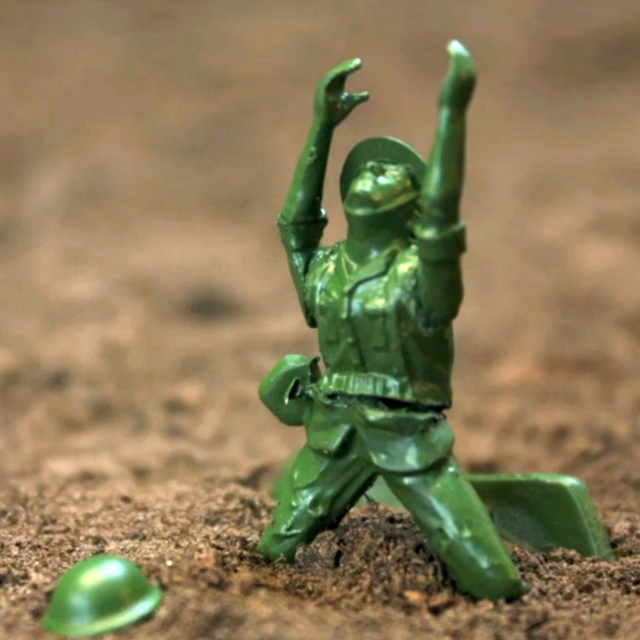
Similar to little plastic army men, players might have one unit be a "minesweeper" army figure, another "crawling on the ground prone" figurine and another "aiming a rifle" miniature. Each unit had certain strengths, weaknesses and capabilities associated with it. This idea seems ok for a game that focuses on the "big picture" of an entire battle; but it is as primitive as a flint-knapped knife when it comes to roleplay and adventure games.

"This game uses race-as-class?! NNNNOOOO!!!!"

In Basic Dungeons & Dragons (red book), for example, you had a few choices when choosing what "type" of character you wanted to play:
  1. Human Fighter
  2. Human Cleric
  3. Human Thief
  4. Human Magic-User
Now, I know some of you are probably screaming at your screens saying that there were really seven choices, not four. But you'd be wrong. The other three options (which all subscribe to the "race-as-class" methodology) are simply a re-hash of two or more of the above classes. Let's review:
  1.  Elf - Fighter/Magic-User hybrid
  2. Dwarf - Fighter with added defense and saves
  3. Halfling - Fighter/Thief hybrid
You'll notice that humans have four choices while elves, dwarves and halflings only have one choice each. This means if you want to be some kind of badass book-thumpin' cleric who calls down the wrath of <insert patron deity>, you can only be human. But what if you were envisioning some kind of awesome dwarf-turned-holy-man? Kind of like how Worf worked for Starfleet or Chewbacca hung out with humans. Well, too bad, you're out of luck. Apparently only humans are noble enough for religion and spirituality.

What about a ninja-like elven thief? Sorry, not in the cards. Only humans can be thieves. Don't even ask about magical halflings, because it isn't going to happen.

Not allowed!

You see, race-as-class means that whatever class, or style of play, you choose for your character, their race (or more appropriately called "species") is inexorably linked to that socio-economic class. This in turn "type casts" less common races--such as halflings--into a certain style of play. There is no room for mixing and matching, no room for flexibility or customization. You're forced to play the style that the game designers chose for you.

And why? To what end were the game designers hoping to achieve? Some may say it's to make humans be the predominant species of the land by there being a 4 out of 7 chance a human-based character class is chosen by players. But who said that humans should be the dominant species in the adventure you want to run? This is really just the designer's way of saying that their notion of "realism" within a fantasy world outweighs your desire to have fun. Effectively, the original D&D designers are either insulting your intelligence by making the choice for you, or flipping you the bird.

 Say YES to choice!

It's no wonder this completely unnecessary and absolutely asinine practice went extinct when the BD&D lineage died out. Even Advanced Dungeons & Dragons 1st Edition, which was released around the same time as Basic Dungeons & Dragons, knew better. Their system wasn't perfect (still denying players the satisfaction of certain race/class combinations because realism), but at least they recognized that players deserve a choice.

So why in the world would certain game designers perpetuate such a silly practice? Your guess is as good as mine. Maybe they are suffering from the Stradivarius myth by believing that everything the founders touched turned to gold. The reality was that they were a bunch of guys who were quite literally making it up as they went. Maybe these offending game designers just want to continue the status quo, without a single forethought into whether it's even a good idea.

I've even heard some apologist old-school gamers try to defend race-as-class by saying that classes are really just a big blurry abstraction and shouldn't be taken so seriously. Um, what? Are you saying I'm wrong in thinking that combination X & Y is more fun for me than just X?

This whole thing is racist, really. No, not real-world racist; but fantasy-racist. It's saying that all dwarves, no matter their background; their upbringing, their homeland, their life choices, etc. all inherently understand gnome, goblin and kobold languages and have a 33% chance of recognizing new construction (Rulescyclopedia page 23). How is that realistic? How is that "just an abstraction"? It certainly isn't worth denying me my halfling magic-user!

 "But why can't we use magic?"

The fact of the matter is that life is a very complex and beautiful thing. Take humans as an example. We come in many different sizes, shapes, colors, cultures, expertise, strengths, weaknesses, capabilities and so on. To type cast humans by saying we are all one and a half to two meters tall would just be wrong. Saying we all have an inherit know-how to use computers, swords, vehicles or science is also wrong. It would be like saying we all run around stealing stuff from people's pockets, or carry battleaxes wherever we go.

Do yourself, your game and the community as a whole a favor; and do right with the players. Give them what they want. Don't force your preconceptions and bias onto everyone else. Let us customize the game how we want.